
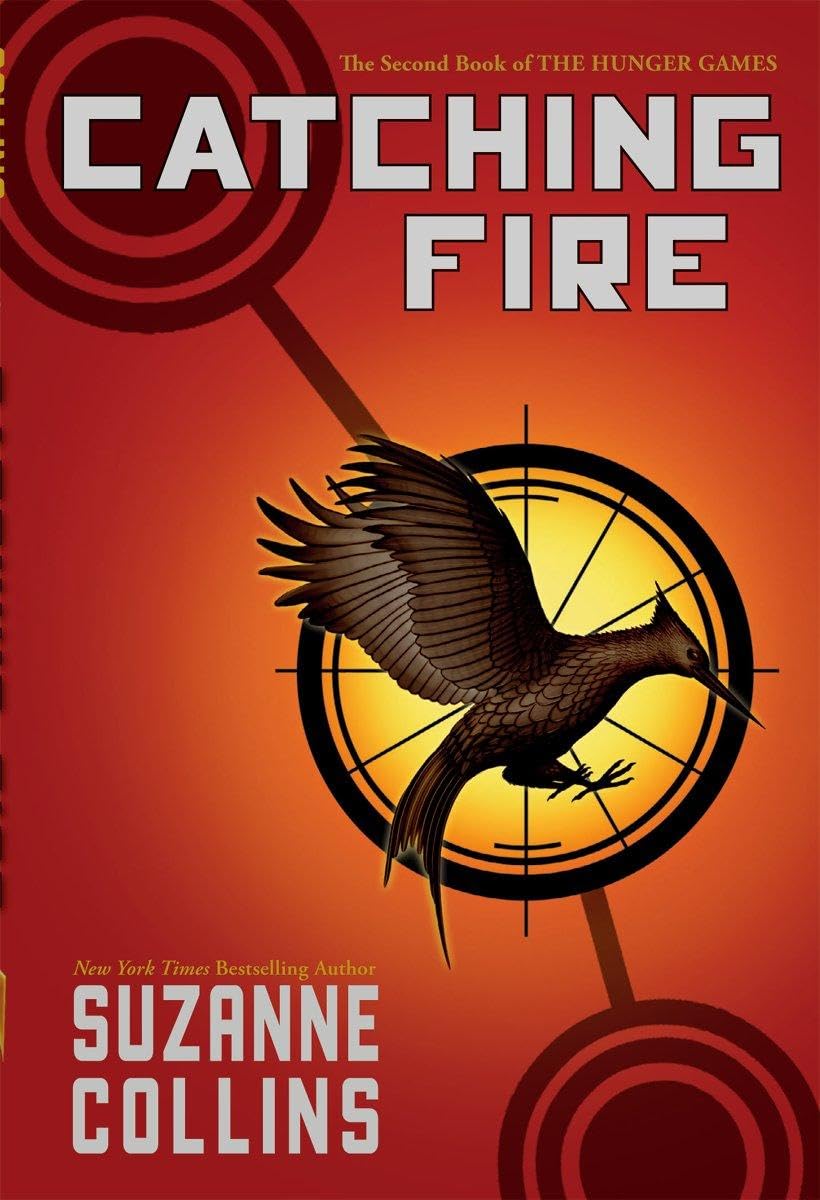

Catching Fire
‘The best thing about Catching Fire is that it's able to build upon the world of the first novel without losing its momentum.’
Some sequels are simply reiterations of what's gone before; this is not the case with Catching Fire, which is more ambitious than that, seeking to build upon what was done previously. This sequel is about as big as it gets and, given the fight-to-the-death nature of The Hunger Games, the question of what comes after the games is asked. The answer is complex as Collins states in the first few pages. Katniss Everdeen returns home unharmed, winning in every way possible, but she is more vulnerable than she's ever been. Once again, she's in the woods, struggling and failing to fall back into the old ways of hunting and feeding her family in the beginning scenes. But it's that restlessness, after the win, that is the true theme of the book. This sequel doesn't believe that the first book's conclusion was a real resolution.
The best thing about Catching Fire is that it's able to build upon the world of the first novel without losing its momentum. Panem is no longer simply an arena, it's a political organism, and a frightening one at that, one that is slowly falling apart. Of the best structural ideas Collins has in the series is the Victory Tour, which should be a celebration, but is a theatre of state-sanctioned pressure. What the Capitol gets are just barely veiled shudders of grief, resentment and defiance. The mere fact that he shows up at Katniss's house so early, and that he is so calm about it, is cool terror in itself, and it's clear that Katniss's actions with the berries have been taken as provocation; and provocation has consequences in a world that thrives on control. Whether it's personal danger or political danger, Collins rides the wave of the transition well, keeping the momentum and readability of the novel going and making the tension now come from surveillance, performance and the fact that private decisions can have public repercussions.
Nevertheless, it is Katniss who is the glue that holds the novel together. She remains one of the more believably un-composed, un-aspirational protagonists of popular fiction for younger readers not because she's so composed or so aspirational, as she's not. She is down to earth, stubborn, still carrying some baggage from trauma, emotionally guarded, even to herself, and often misguided regarding her emotions. It is that mix that makes the book filled with human density. A smaller writer would have buffed up Katniss to make her shinier, more obviously heroic, in the wake of the first novel. Collins refuses. She comes back home confused, guilty and in silent rage, realizing that her life has become a place she can't find her way and can't control. The material wealth is not suitable for her. Some of the most quietly revealing moments in the book are when she strips down from her hunting garb and laments the house she no longer inhabits, and attempts to enjoy the empty comforts of Victor's Village, a young woman who got the one thing she thought she wanted only to discover that it's another kind of trap. The love affair is more solemn here as well. At times, it was the tried-and-tested young-adult love triangle (as in the first novel). In Catching Fire it's not about personal feelings and personal choices. They are engrossed in publicity, in state politics and in the fight for life.
There are flaws in the novel. One issue with Collins is her lack of nuance as she is a very clean, purposeful storyteller. Several of the plot turns feel more like a plot device to speed up the time and less like a surprise, and an eagle-eyed reader may be able to see some of the turns coming before Katniss. The romantic tension is more emotionally believable than in most similarly-situated books, but in some cases, it is melodramatic. But there is a feeling, particularly in the latter part of this book, that this novel is more self-serving than it is different in that it would seem it's trying to raise the stakes for itself. All these are not unimportant observations, but they're all small compared to what the novel does well. In some ways, Collins's prose is spare, but never without any of the details she needs; her scenes are often held together by a few, careful, sensory details: the pinching of formal shoes, the slight blood taste on Snow's breath, the mess of Haymitch's kitchen, the fake cheerfulness of visitors of the Capitol, who treat suffering as entertainment. These details provide texture to the book, and keep the political ideas from floating out of the story.
The conclusion isn't a difficult one. Catching Fire is not only a pretty good sequel, but in many ways it's a better book than its predecessor. Despite the negative sides I mentioned earlier, it's five stars because it doesn't lose anything in its quality that made the first novel so interesting to read: the pace, the tension, the accessibility, and the increasing issues of propaganda, complicity, repression and the gradual sparking of resistance. The middle of the trilogy is a rare occurrence, both more expansive than the other two, and more heart-on-sleeve. Those that came for the action won't be disappointed. If you're looking for a more nuanced perspective of Panem and those who it impacts, you'll find that here too. What they will also discover is a novel that understands that "the spectacle is never the whole story. Behind each triumphant march, there's a person and behind each person there's a fear that she may be totally unqualified to carry what others have decided to put on her. But it's the understanding that is the real power of Catching Fire, and what makes the book stick with the reader after the last page.
From our readers
Reader Insights
Keep exploring
Similar reviews to explore
Because readers found this Adventurous
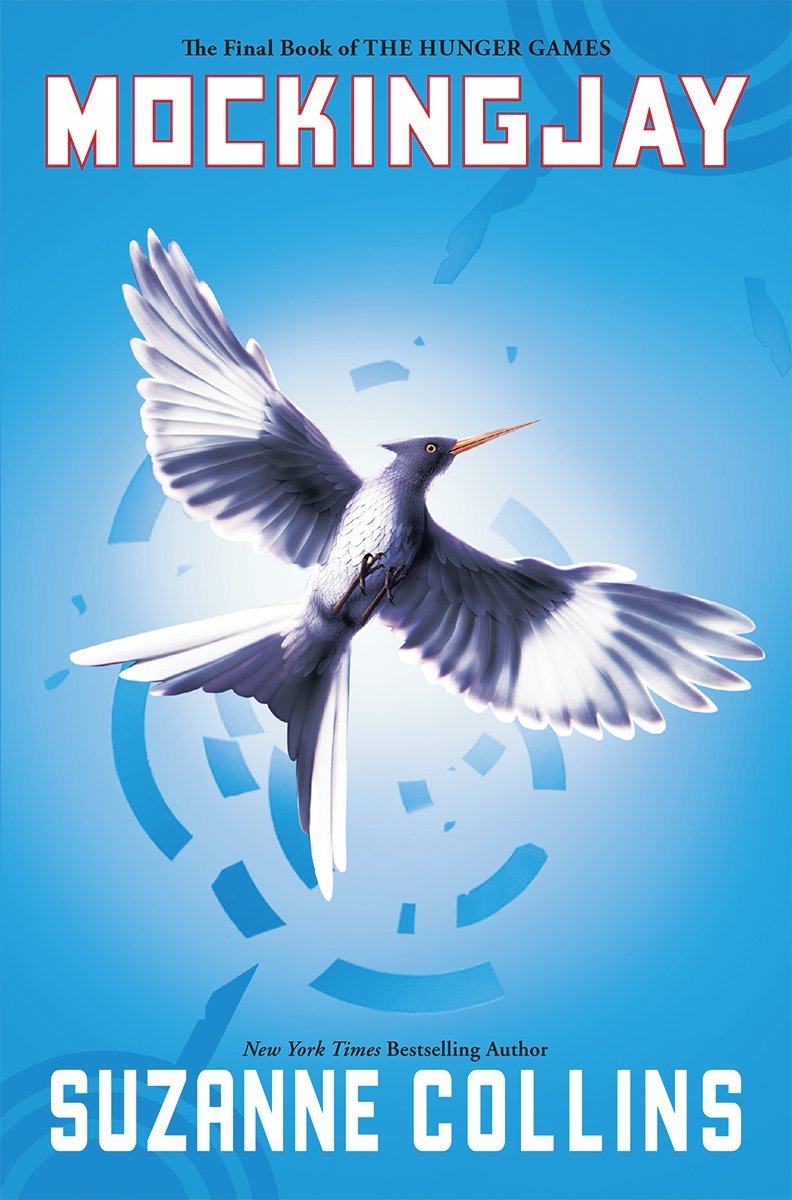
Mockingjay
What Collins does best in this novel is to make revolution seem anything but noble, clear-cut...
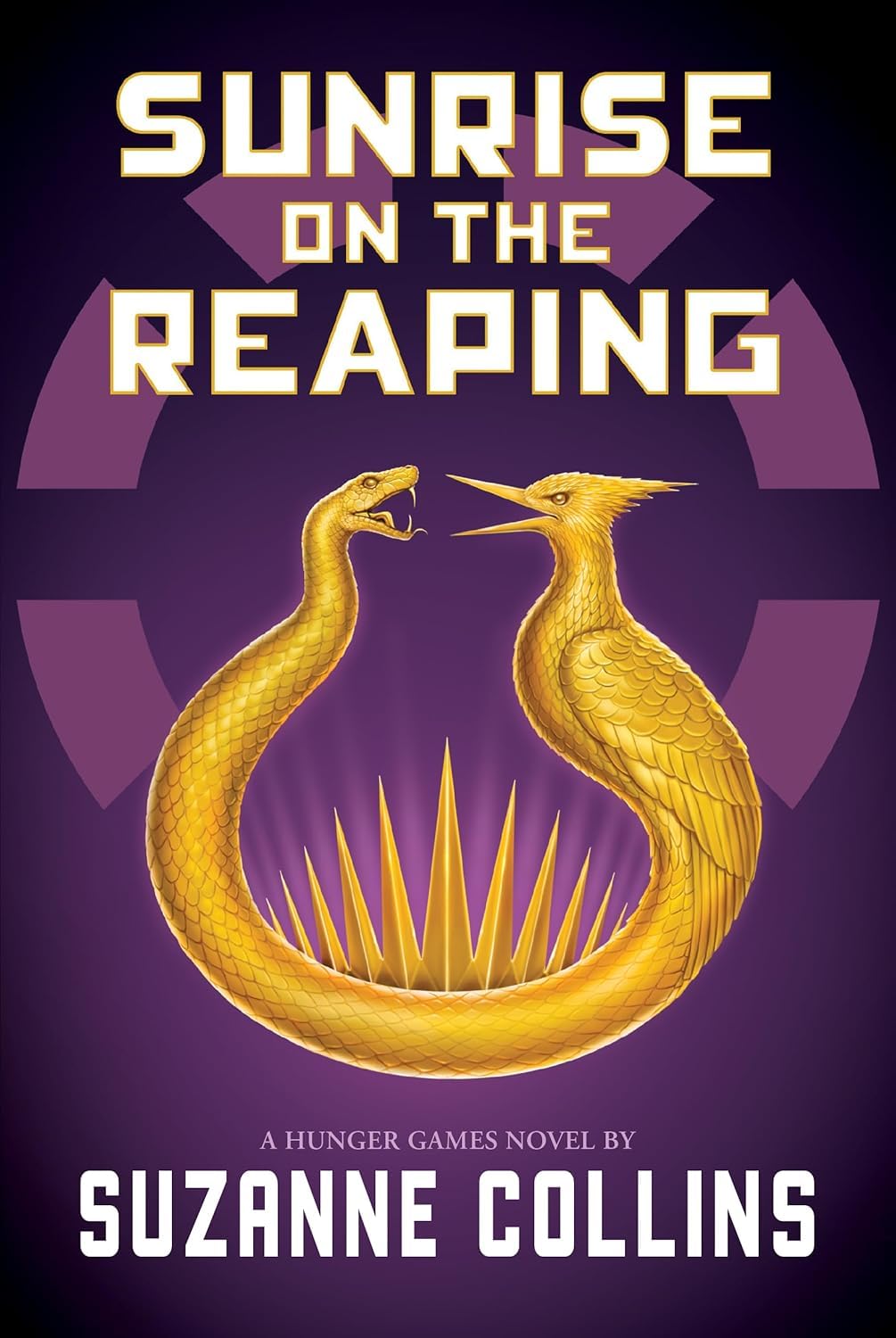
Sunrise on the Reaping
It was the tone of the first section in District 12 that attracted me to this, and was very...

Darkstocking
The author creates a bright secret world with rituals, strange signs, flickering candles and...