
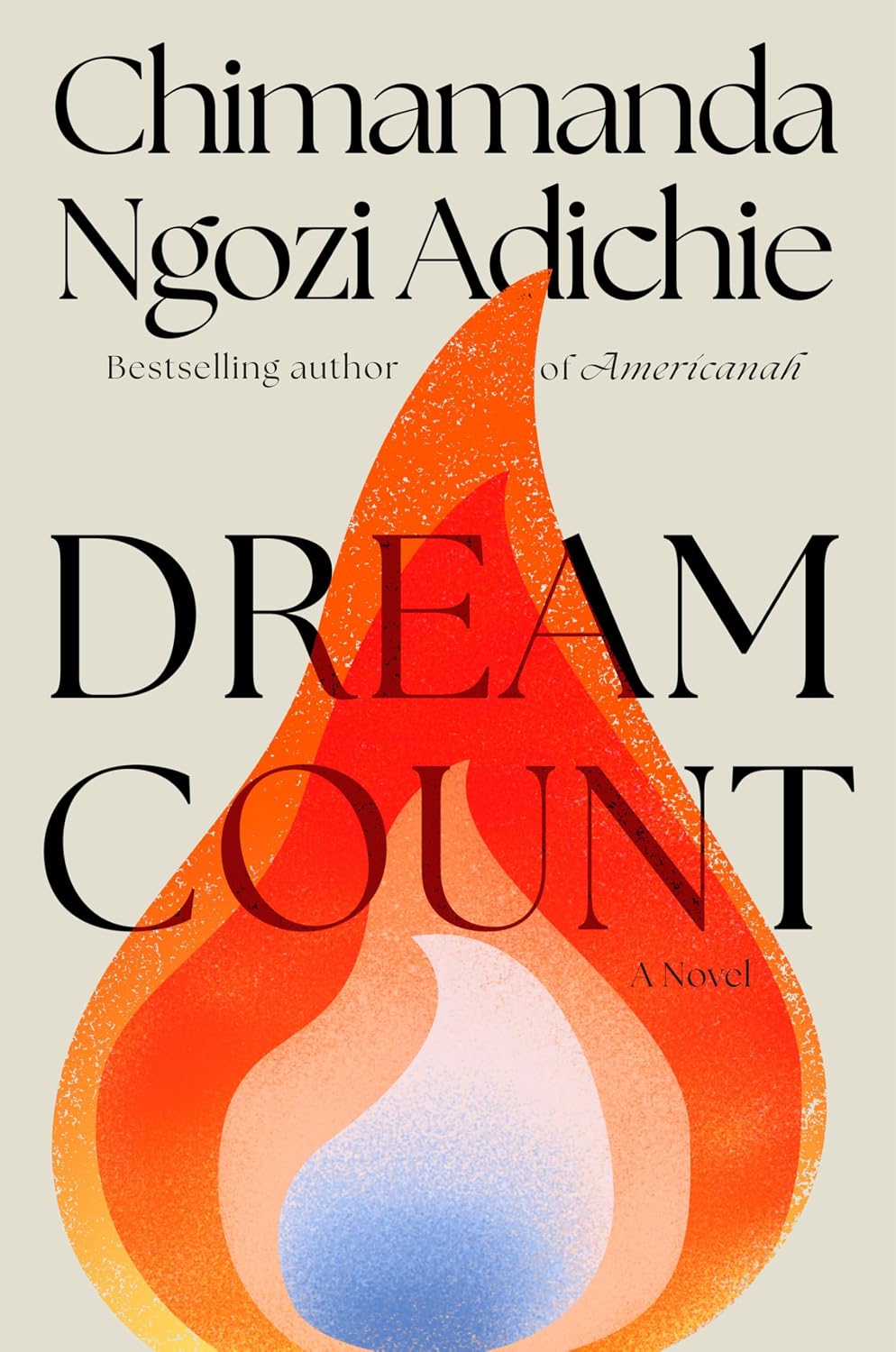

Dream Count
‘I believe there was an emotional flow in Zikora's part, especially Kadiatou's, and this made my reading of the book rawer.’
Dream Count held me at a distance from the beginning. From the start, it was obvious that the sentences were clear, the engineering genius of the structure was undisputed and Chimamanda Ngozi Adichie’s ability to take a throwaway remark and make it into something thought through was meticulously considered. However, I found myself appreciating the book externally rather than being charmed by it. The first few chapters were thought-provoking and well written, particularly Chiamaka's thoughts on love, loneliness and the strange in-betweenness of the pandemic; yet they were somewhat chilling. I wanted to learn more but wasn't hooked. I felt like a new book asking you to trust it while subtly building towards something, and through the first pages, I was still waiting to feel the pull.
What eventually dragged me in was the slow accumulation of these women’s lives. Once I got the hang of the book, I understood that Adichie is not looking to make a plot, but something more substantial and sophisticated than that. She spins with regret, longing, identity, class, migration and private stories women make to carry on. It's already beautifully hinted at in the opening pages; the low hum of unease of being locked down, the stillness of suburban life, the family calls filled with tension and unwelcome news, the feeling that a life has been put on hold but not at rest. This is emphasised in the novel as it rotates among the four characters of Chiamaka, Zikora, Omelogor and Kadiatou. I love the way that each woman reinterprets the other, and the manner in which she does it. Nobody stays fixed, or as easy to understand as they seem at first.
It was about midway through the novel that I got hooked. I believe there was an emotional flow in Zikora's part, especially Kadiatou's, and this made my reading of the book rawer. Until then I'd been impressed with the intelligence and emotional seriousness of the novel as something to be admired at a distance; Kadiatou's arc gave me the impression that it was something a bit closer. What Adichie has done here, her special gift, is not only to be able to show suffering with verisimilitude, but also to be able to show dignity with verisimilitude. The book is assertive and not angry at all. It constantly re-appeals to the particular in the general problem. This is when this book began to become awesome.
Also, the depiction of friendship between women in the novel is simple yet captivating. By the end of the novel, the males have been pretty much disenfranchised of romance. What's left is how these women look at each other, how they misunderstand each other, how they prop each other up and sometimes, how they know each other better than any romance ever has. One thread that I found to be the most rewarding was that one. Omelogor is probably the most vivid and challenging character in the book, sharp, restless, often funny and I liked the fact that Adichie doesn't tidy her up into a neat symbolic character. She remains prickly, contradictory and really alive on the page.
However, she didn't get all the things for me. It's not a flawless novel in all its aspects, even the ending. The multiple perspectives give the women space to breathe, but also don't give the whole as much interweaving as I would like. In some ways I felt like I was reading four good novellas at once, rather than one big novel. Chiamaka's love life can also sometimes be a cyclical affair and at times can be so self-referential that the momentum of the book slows down, especially in the first half. Adichie’s prose can be heavy, but not weighty enough to make every part have equal force. I understand that some readers may feel emotional in some parts, and not in others.
So, by the end of the book I knew that there was something in it for me. I didn't see it at first and not every time, it got deeper as it went on and left more of itself behind than I'd thought it would when I began. This is an amazing achievement in and of itself! It is not perfect, but is very good, mature, intelligent and sincere, hence the 4 out of 5 stars. Dream Count isn't a grab-you-by-the-hair-on-the-first-page novel. It was the other sort for me: the one that creeps up slowly, and then silently stays.
From our readers
Reader Insights
Keep exploring
Similar reviews to explore

Deep End
Ali Hazelwood's Deep End is a character-led romance that explores the themes of personal...
Forever Now
Haleh Shahrzad, Forever Now, explores the bitter realities of a marriage built on lies and how...

Great Big Beautiful Life
Great Big Beautiful Life is a solid novel that strives towards something greater.