
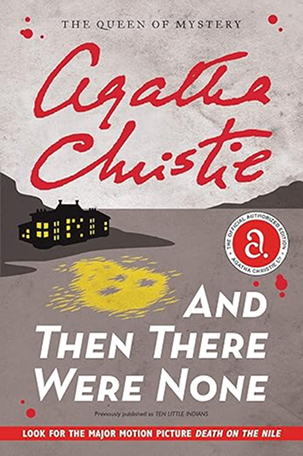
And Then There Were None
‘The novel explores the issues of guilt, justice and human nature, thus going beyond the limits of a simple murder mystery.’
Agatha Christie's And Then There Were None was initially published in 1939, at a time when the popularity of mystery fiction was growing very rapidly. At that point, Christie had already become a well-known and respected writer, with smart plots and unforgettable detectives. She took a very different direction in this work: the story is not told by one detective, but by the fears, secrets and actions of the characters themselves. The plot is set on a small remote island off the English coast. Ten strangers are called there on the pretext of an apparently ordinary stay. Both characters arrive with little information about their host and no apparent sign of imminent danger. The island environment becomes more hostile as the story progresses. The characters lose any direct way to escape or to be helped and become isolated from the world. Christie uses this isolation to build tension gradually. The novel explores the issues of guilt, justice and human nature, thus going beyond the limits of a simple murder mystery.
Critically speaking, although the novel is praised for its brilliantly developed suspense and skillful use of so-called red herrings, some readers argue that the lack of a main, likeable character, as all the characters are unapologetic criminals, hampers their capacity to develop an emotional bond with the victims. Nevertheless, the first lesson that I could learn as a reader is the power of structural irony and psychological guilt; the story proves that a plot can be driven by the unavoidable consequences of unsanctioned crimes catching up to offenders, rather than by a traditional hero. Besides, the book serves as an exercise in fair-play mystery writing, teaching us that though a plot might be complex enough to need a postscript explanation, the most lasting stories are those where the audience solves the puzzle of morality and human nature before the magician's final reveal.
From a positive perspective, Christie's masterpiece is a gold standard for technical plotting, teaching modern readers how to create suspense by isolating characters and putting a psychological burden on a guilty conscience. Its locked-room genius signals our modern interest in true crime and social experimentation, showing how individuals act when they are denied societal protection. However, as I had previously mentioned, the downside is that the story is presented in a clinical way. Since all the characters are cold-blooded criminals, there is no one to empathise with, no hero, and this can make a reader feel as cold as the island. The clear explanation at the end, though helpful in terms of clarity, deprives the book of the mystery that many modern readers will desire. This piece in the modern day is a chilling metaphor for the court of public opinion and internet accountability; just like the guests on the island, people today usually find their past secrets judged and unearthed in the inescapable, relentless arena of the internet. Thus, this is a reminder that despite the fact that justice can be delayed, the shadow of our past deeds is difficult to cover in today's hyper-connected world where everybody is tracked and there is no anonymity.
I would recommend the book specifically to those who study creative writing or are fans of so-called escape-room puzzles, as it is a masterpiece of tension and structure but can cause some readers to feel emotionally distant. I rate it four out of five stars mainly because, while the plot's mechanical ingenuity cannot be denied, there is no human heart and no protagonist to champion. As I mentioned previously, the characters are mostly unlikeable criminals who show very little remorse, which makes their deaths more like game-piece elimination than loss. Moreover, the choice to reveal the whole mystery in a last tell-all chapter is like a magician describing a trick; it offers clarity at the cost of wonder and the pleasure of long-term speculation. Lastly, the pacing feels uneven towards the end, and the action accelerates suddenly in the last three victims. It is excellent clockwork, but to have rated it higher, I would have liked a more familiar anchor and an ending that was not so crammed with the need to over-explain its own brilliance.
From our readers
Reader Insights
Keep exploring
Similar reviews to explore
Inherited Secrets
This book has a quiet boldness that explores the psychological terrain of inherited trauma and...
Modern Magica
The positive side of this story lies in the beauty of human relationship and transformation.
The Third Estate: Devil's Tango
...what genuinely makes the book flow is the way the action is combined with real mystery